
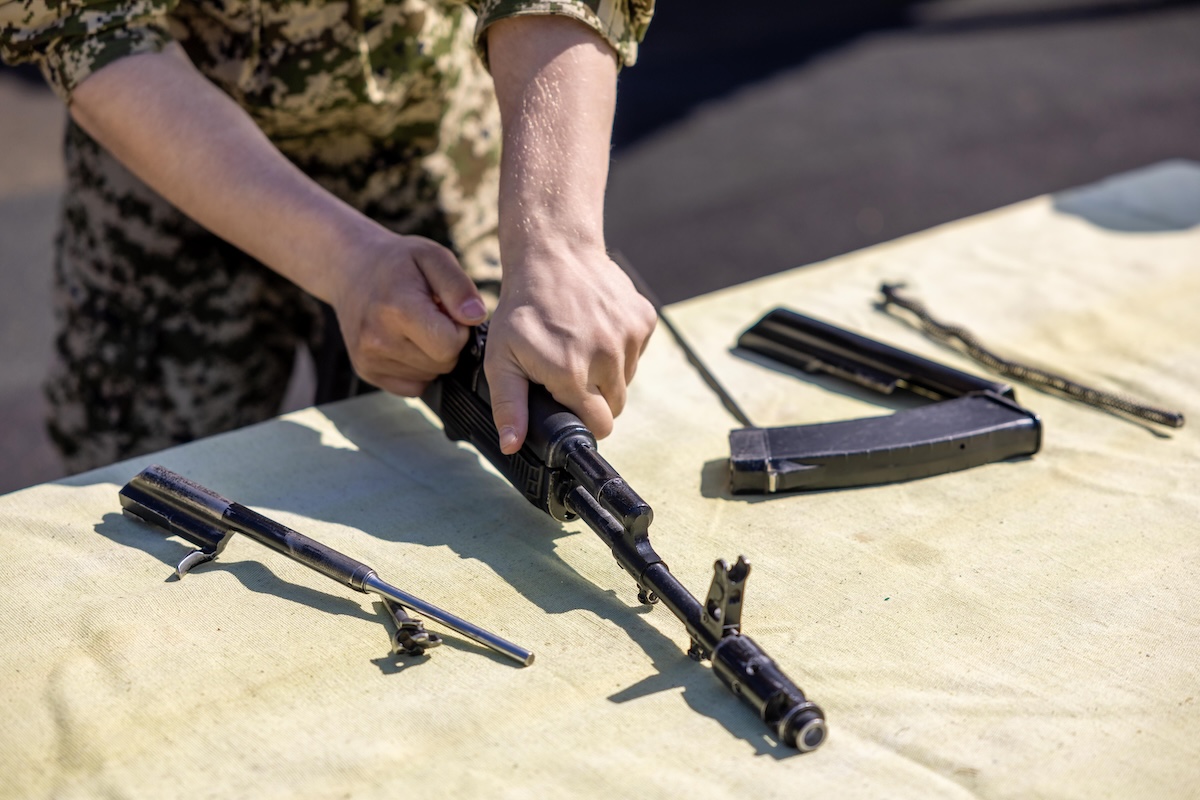
If I repair, modify, store, or test-fire customer guns, a basic gun shop policy may leave me paying out of pocket.
Here’s the short answer: gunsmithing adds risks that retail firearm sales do not. The main gaps are customer guns in my possession, problems after a gun leaves the shop, shop tools insured too low, wrong workers’ comp class codes, and lost income after a shutdown.
Before I trust a policy, I’d want to check these five points:
A few facts stand out from the article. Standard general liability often excludes property in my care, custody, and control. Workers in gun-barrel manufacturing have reported skin rash, breathing issues, and dermatitis tied to metalworking fluid exposure. And if my shop mixes retail sales with bench work, one claim can trigger more than one part of the policy at once.

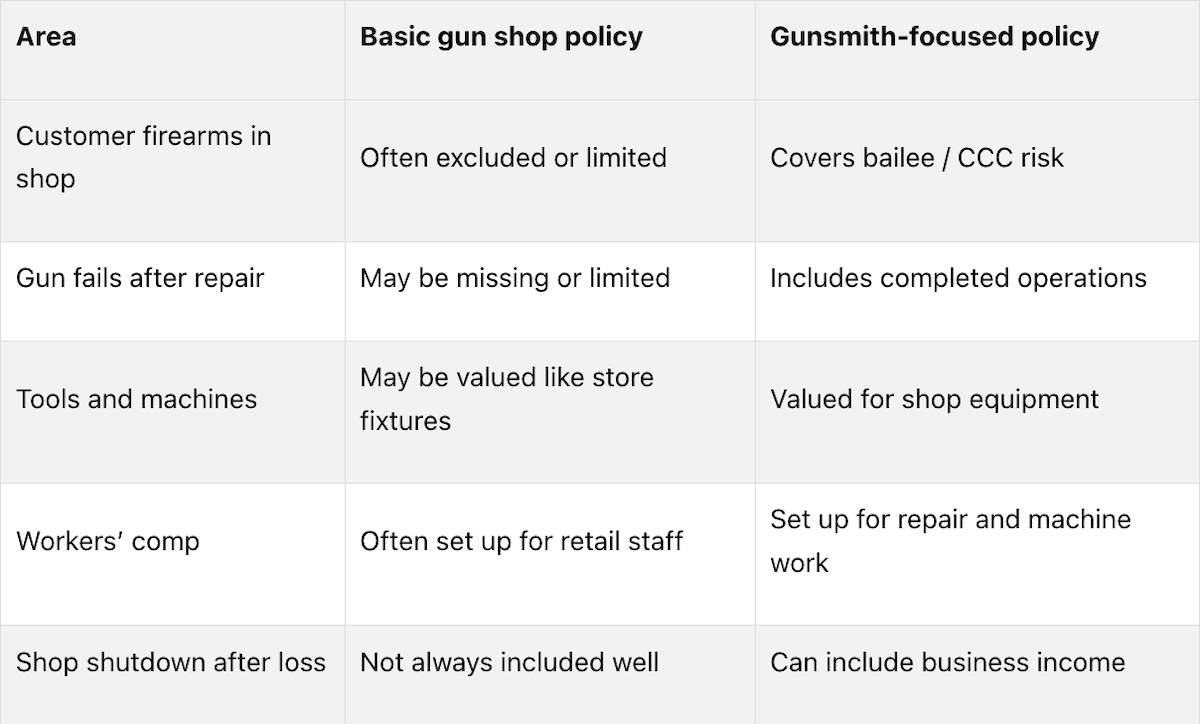
Bottom line: if I do bench work, I need coverage built for the bench, not just the sales floor.
The weak spots show up in three places as soon as the job begins: customer firearms, post-service failures, and shop equipment built for gunsmithing work.
The first gap is usually the one gunsmiths run into first.
If a firearm gets dropped, a part goes missing, or someone steals it from the bench, that’s a bailee loss. And under most standard general liability policies, that claim is not covered. Gunsmith business insurance needs care, custody, and control coverage to fill that hole, because every customer firearm in your shop is property you’re responsible for even though you don’t own it.
And the risk goes beyond the firearm itself.
If a firearm fails after it leaves the shop, that falls under completed operations exposure, not a premises loss. That difference matters the minute a claim lands on your desk. If a standard policy doesn’t include completed operations coverage, the gunsmith can end up stuck with an uninsured loss for work that may have been done properly in the shop but later failed in the field.
Lathes, vises, gauges, refinishing equipment, and test gear aren’t ordinary shop items. They represent a major capital investment, yet standard business property coverage often insures them as if they were plain retail fixtures. For a gunsmithing operation, property coverage needs to match the actual replacement cost of specialized equipment, not a depreciated number built for a showroom floor.
When gunsmithing operates inside a retail shop, the risk gets broader again.
Gunsmithing is machine-shop work, so workers' comp needs to reflect that level of risk. The problem usually isn't the injury itself. It's when a shop doing bench work gets rated under a policy built for retail. Once that happens, the workers' comp exposure can be off from the start.
A gunsmith shop doesn't share the same injury pattern as a standard retail business. Cuts can come from sharp metal edges, grinders, polishing wheels, and hand tools that slip at the wrong moment. Burns can happen around soldering stations, blueing tanks, torches, and curing ovens.
Chemical contact is another big issue. Solvents, degreasers, metalworking fluids, and bluing solutions can lead to dermatitis, chemical burns, and breathing irritation, especially if ventilation isn't up to par. A NIOSH evaluation of a gun barrel manufacturing facility found metalworking fluid mist at the occupational exposure limit, with employees reporting skin rashes, breathing problems, and dermatitis.[2]
Then there's the wear-and-tear side of the job. Filing, stoning, fitting, and long hours at the bench - often in awkward positions - can lead to repetitive strain injuries over time.
Those hazards should be rated as repair-shop risk, not retail risk.
Retail workers' comp codes are built around sales-floor duties, not machining, refinishing, or test firing.[3][4] So when those codes get used for employees operating a lathe, applying chemical finishes, and test firing finished work, the fit is off.
And that mismatch can turn into a mess after an injury. A retail-rated policy may lead to questions about whether the shop was classified the right way in the first place. That can mean delays, disputes, or reclassification with retroactive premium adjustments.[5]
The best move is simple: document how employees divide their time across machining, refinishing, test firing, bench work, and retail sales. Good records help keep the classification accurate and make claim handling smoother. Joseph Chiarello & Co., Inc. brings gunsmith-specific underwriting depth to shops built around the repair bench, not the display case.[1]
That same mismatch gets even tougher to deal with when the shop also sells firearms at retail.
A gun shop with a bench in the back is no longer just a store. And a standalone gunsmith who starts selling optics, ammunition, and accessories is no longer just running a service shop. When both sides of the business operate in one place, a single loss can set off more than one part of the insurance program at the same time.
That’s where many shops get stuck. Standard policies often split these risks in awkward ways, which can leave holes right where the work and the sales side meet. The easiest way to spot that problem is to look at the claims that come up again and again.
These overlaps tend to show up in familiar losses.
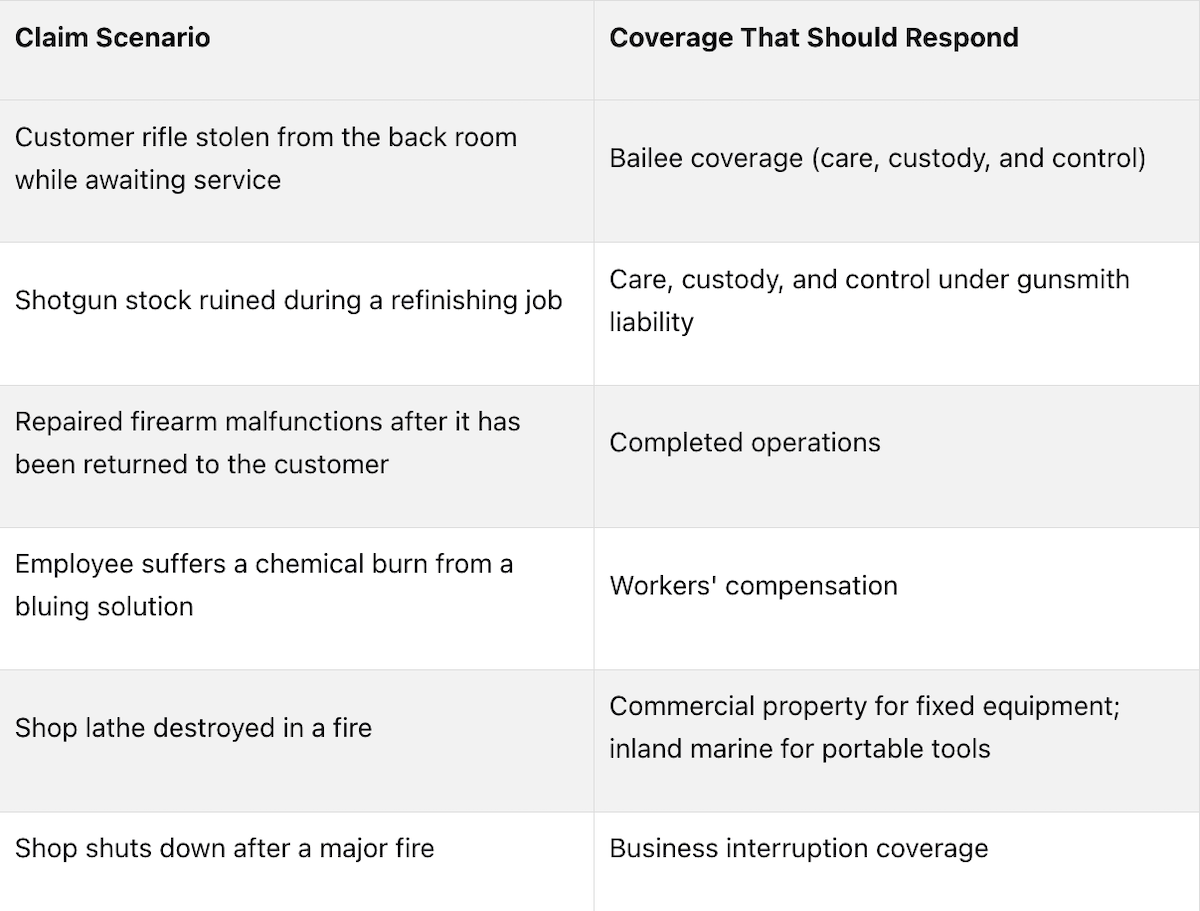
The trigger-work example deserves a closer look. If a modified firearm leaves the shop and later fails, the completed operations exposure is in play. And if the policy does not clearly cover gunsmith work, that claim may hit the shop’s completed-operations exposure with nothing there to pay it.
That’s the core issue: the policy has to follow the work, not just the storefront.
A program for a shop that handles both service and retail needs to cover each side of the business as it actually runs. One policy usually can’t stretch far enough if it was never built for that mix of work.
In plain terms, the program should include:
The goal is one program that fits both the bench and the sales floor.
Once you spot those gaps, the only question that matters is simple: does the policy fit the work happening at the bench?
If your shop repairs, modifies, refinishes, stores, or test fires customer firearms, a standard gun shop policy will often miss the shop-floor risks that matter most.
Bailee coverage protects customer firearms while they're in your care, custody, and control. Completed operations coverage applies after a repaired or modified firearm leaves the shop. Workers' compensation needs to match hands-on trade work, including cuts, burns, chemical exposure, and repetitive tool use. And property and business income coverage should reflect specialized tools and machinery at replacement cost.
When retail and gunsmithing happen under the same roof, one claim can hit more than one part of the policy at the same time. If one part is missing, limited, or misclassified, that's where the shop ends up paying out of pocket.
The quickest way to check whether the policy fits is to line it up against the work your bench actually handles:
Joseph Chiarello & Co., Inc. (guninsurance.com) brings gunsmith-specific underwriting depth and 40+ years of experience covering standalone gunsmiths and gun shops with in-house gunsmithing across the United States.
Not by default.
General liability usually covers third-party bodily injury and property damage that happens on your premises. But it often does not cover customer firearms that are in your care, custody, and control while you’re servicing or repairing them.
For that, you need bailee coverage.
Joseph Chiarello & Co., Inc. specializes in coverage for standalone gunsmiths and gun shops with in-house gunsmithing.
If a firearm malfunctions after it leaves your shop, the main coverage is product liability insurance.
Here’s the simple split: general liability usually covers accidents that happen on-site, while product liability covers claims that your repair or modification caused injury or property damage.
For gunsmithing, that difference matters a lot. A failure after service can lead to steep financial risk, especially when a claim points back to work done in your shop.
Joseph Chiarello & Co., Inc. brings 40+ years of experience in this specialized coverage.
It can be a problem if your gunsmiths or range staff are listed under low-risk administrative or retail clerical codes instead of the right, higher-risk firearms-related classes.
That kind of mix-up can leave a big hole in your coverage. If someone gets hurt and the employee was placed under the wrong code, the claim could be denied. Then the medical bills and legal costs may land on you. Joseph Chiarello & Co., Inc. can help make sure your staff are classified the right way.
Don't wait until it's too late to make sure your gun shop is covered. At Joseph Chiarello & Co., Inc., we’re here to help you navigate the ins and outs of gun shop workers compensation insurance to ensure you're prepared for any noise-related risks, including hearing damage. Reach out to us today to review your current policy or get a customized quote. Protect your team and your business with the right coverage—because their safety is worth it.
Call Now: 800-526-2199. Or submit your inquiry below. We look forward to having the opportunity to work with you!