

Indoor gun ranges pose serious health risks due to lead exposure. When firearms are discharged, lead particles are released into the air from lead-based primers and bullet fragmentation. This airborne lead can be inhaled, ingested, or transferred via skin contact, causing dangerous blood lead levels (BLLs) in employees, shooters, and even their families. Poor ventilation, improper cleaning practices, and take-home contamination worsen the problem.
Key takeaways:
Reducing lead exposure requires a combination of engineering controls, workplace policies, personal protective equipment, and regular monitoring. Compliance with OSHA regulations not only protects health but also minimizes financial liabilities for range operators.
Each time a firearm is fired, it releases a cloud of lead-filled particles. This happens because the primer, which can contain up to 35% lead styphnate and lead peroxide [5], ignites and creates a high-pressure burst of fine lead dust. This dust spreads out at right angles to the shot, directly into the shooter’s breathing zone.
The problem doesn’t stop there. When bullets hit the backstop or bullet trap, they break apart, scattering even more lead particles into the air. Routine maintenance tasks like dry sweeping, changing ventilation filters, and cleaning bullet traps can stir up settled lead dust, making the air even more hazardous. In fact, air samples taken during these activities have shown lead concentrations reaching 64 µg/m³ - well above OSHA’s permissible exposure limit (PEL) of 50 µg/m³ [2].
Ventilation issues make things worse. If airflow at the firing line drops below the recommended 30 ft/min, or if contaminated air flows backward toward shooters instead of downrange, the risks multiply. Poorly sealed ductwork and wall openings allow lead-contaminated air to travel into non-shooting areas like offices and showrooms, spreading exposure beyond the firing line.
Lead can enter the body in three primary ways: inhalation, ingestion, and skin contact.
The most common route is inhalation. Breathing in airborne lead particles from primer ignition or bullet fragmentation allows lead to go straight into the lungs [1][5]. Ingestion is another major concern. Lead dust can settle on hands, clothing, and surfaces, and it’s easily transferred to the mouth when people eat, drink, or smoke without washing their hands first [1][2]. While skin contact doesn’t directly absorb much lead, it acts as a transfer point - contaminated hands can spread lead to food, faces, and even household surfaces.
"Lead from the hands can be ingested while handling food, beverages, and other items that contact the mouth." - Chucri A. Kardous, MS, PE, NIOSH [1]
These exposure pathways highlight why certain groups face greater risks, as outlined below.
Not everyone at an indoor gun range is equally exposed. The table below breaks down the most at-risk groups and the factors that put them in harm’s way:
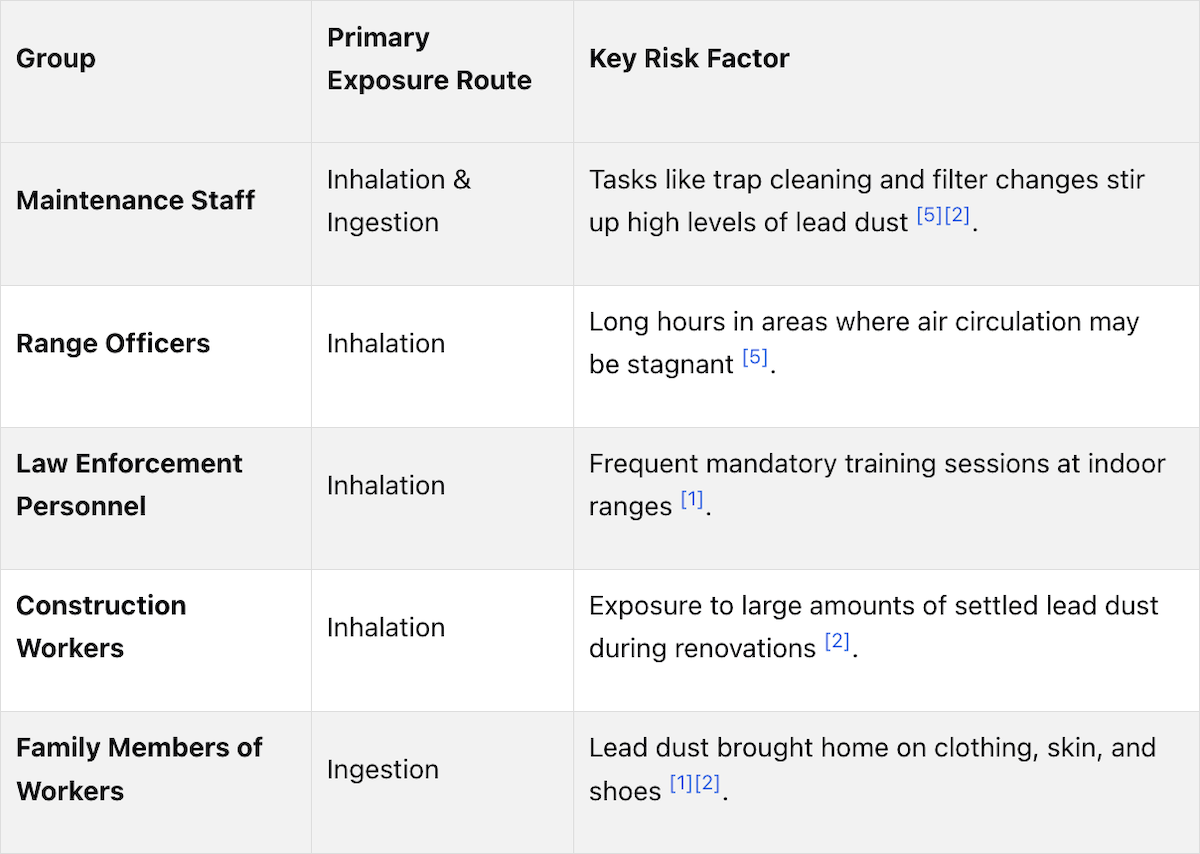
The dangers for these groups are evident in blood lead level (BLL) data. Between 2002 and 2012, 2,056 individuals in law enforcement or recreation-related jobs were reported with BLLs at or above 10 µg/dL [2]. Law enforcement trainees, in particular, show how quickly lead exposure can escalate. In one study, their average BLL shot up from 6.5 µg/dL to 50.4 µg/dL after training at an indoor range [1].
"Those who work or train regularly at indoor firing ranges could be exposed to hazardous levels of lead and noise." - Chucri A. Kardous, MS, PE, NIOSH [1]
Children of range workers are especially vulnerable. Even if they never visit a range, they can develop elevated BLLs from lead dust brought home on a parent’s clothes or skin [1][2]. The CDC recommends keeping BLLs below 5 µg/dL for children and pregnant women, but take-home exposure can easily exceed this limit [2]. These risks underscore the importance of strict lead safety measures in indoor gun ranges.
Lead exposure is harmful even at blood lead levels (BLLs) below 10 µg/dL. According to the National Toxicology Program (NTP), even these low levels are linked to increased blood pressure, a higher risk of hypertension, and neurological issues like essential tremors [2].
Lead’s impact spans several body systems:
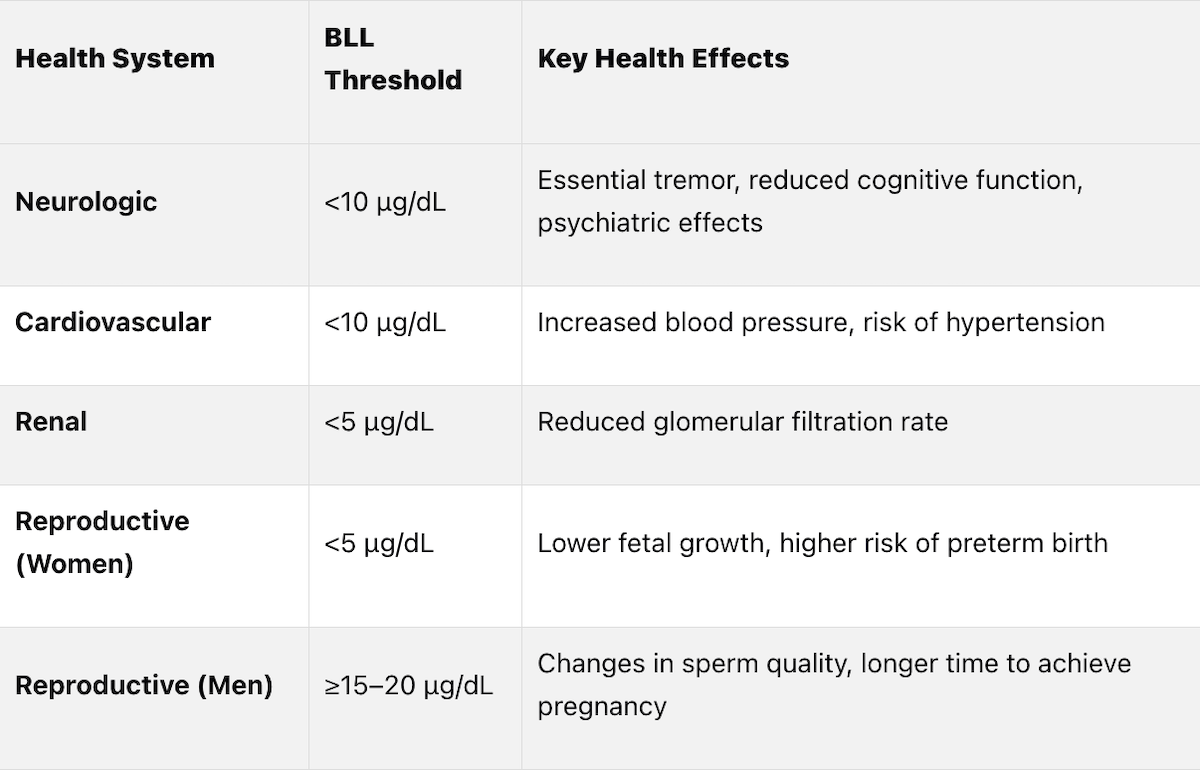
Chronic exposure makes things worse. Lead is considered a probable human carcinogen, and studies show that recreational shooters often have BLLs over 40 times higher than the general population [5].
"Shooting-range employees are at risk of daily lead exposure and, even at low levels, the constant exposures lead to elevated BLL concentrations over time." - Robert Alcock et al., MDPI [5]
These health dangers tie directly into the legal responsibilities of range operators, as outlined in the next section.
Indoor shooting range operators must comply with OSHA’s lead standard (29 CFR 1910.1025), which requires air monitoring and medical surveillance when airborne lead levels hit the action level of 30 µg/m³ [6]. Two real-world cases highlight the consequences of non-compliance.
In October 2012, Washington State’s Division of Occupational Safety and Health (WaDOSH) investigated an indoor range after two employees showed BLLs of 40 µg/dL and 48 µg/dL. Out of 98 individuals tested, 46 had elevated BLLs, with one construction worker reaching a staggering 153 µg/dL. WaDOSH issued citations for unsafe practices like dry sweeping and lack of monitoring, leading to extensive lead abatement efforts, including cleaning workers’ homes and vehicles [2].
Similarly, in December 2013, NIOSH evaluated a California indoor range and found lead contamination on eating areas, showroom floors, and desks. Task-based air samples during cleaning showed lead levels reaching 64 µg/m³, while employee BLLs ranged from 19.9 µg/dL to 40.7 µg/dL. NIOSH alerted the county public health officer, underscoring the severity of the issue [2].
Range operators also face obligations under Medical Removal Protection (MRP). If an employee’s BLL hits a level requiring removal from exposure, employers must maintain their pay and seniority for up to 18 months [6].
"The standard requires medical monitoring for employees exposed to airborne lead at or above the action level of 30 µg/m³, medical removal of employees whose average BLL is ≥50 µg/dL for construction or 60 µg/dL for general industry, and economic protection for medically removed workers." - OSHA [2]
Failing to meet these requirements can lead to steep legal and financial consequences.
The financial fallout from lead exposure can be substantial for shooting range operators. Investigations or shutdowns for decontamination can disrupt business operations, while professional lead abatement - covering surfaces, HVAC systems, and even employees’ personal belongings - adds hefty expenses on top of regulatory fines.
Liability risks from take-home lead exposure are another major concern. If an employee unknowingly brings lead dust home on their clothing or skin, and a child develops elevated BLLs as a result, the range owner could face civil lawsuits [2]. On top of that, bad press or public health warnings can erode customer trust and jeopardize key contracts. Staying compliant isn’t just about safety - it’s critical for protecting the business.

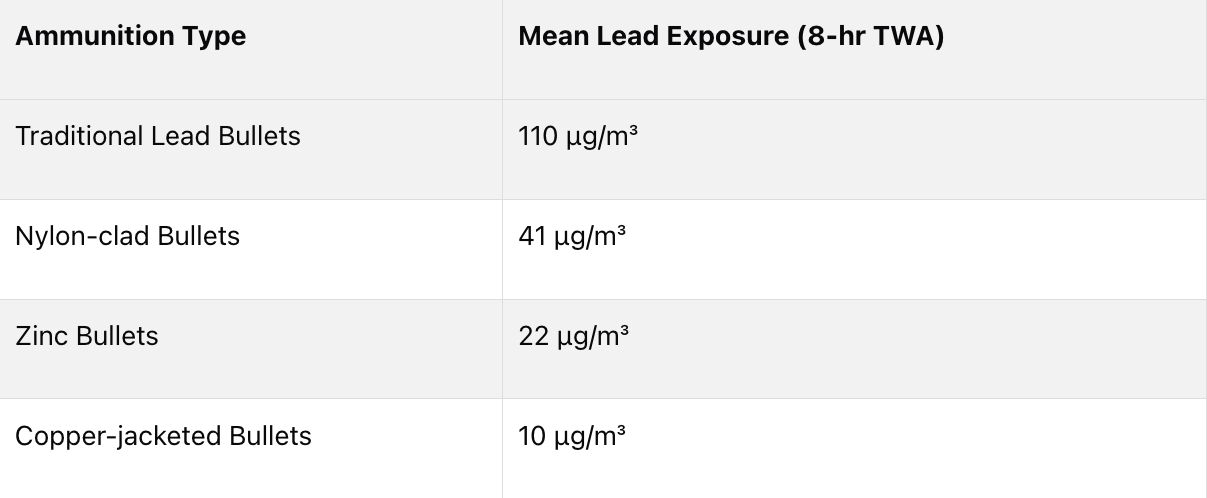
Switching to alternative ammunition is one of the most effective ways to reduce airborne lead exposure. For example, using copper-jacketed bullets instead of traditional lead ammunition can lower airborne lead levels from 110 µg/m³ to 10 µg/m³ - a decrease of over 90% [4].
"Airborne and surface lead levels in firing ranges can be greatly reduced by using lead‐free bullets, improving ventilation systems, using wet mopping or HEPA vacuuming instead of dry sweeping." - Catherine Beaucham, MPH, NIOSH [2]
Ventilation systems are equally important in controlling lead exposure. Properly designed systems should maintain a downrange airflow of at least 30 ft/min and include exhaust filters rated MERV 18 or 19 to prevent contaminated air from recirculating [2]. Filters must have secure side and face gaskets to avoid air leaks, and all openings between the range and adjacent areas should be sealed to keep lead dust contained [2].
While engineering solutions significantly reduce airborne lead, they work best when paired with strong workplace practices.
Consistent workplace practices are key to keeping lead exposure under control. Cleaning methods like wet mopping or HEPA-filtered vacuuming are essential, as dry sweeping can stir up dangerous lead dust [2]. To further reduce risks, prohibit eating, drinking, and smoking in or near the range. Employees should wash their hands thoroughly with decontaminating soap before breaks, and contaminated uniforms should be professionally laundered to prevent lead from being brought home [1] [2]. These everyday measures reinforce engineering controls, creating a safer environment for all.
When engineering controls and workplace policies aren't enough, personal protective equipment (PPE) and training provide an additional layer of safety. Tasks like cleaning bullet traps, replacing ventilation filters, or maintaining the range require NIOSH-approved N100 or HEPA-rated respirators, as well as full protective clothing, chemical-resistant gloves, and either dedicated footwear or disposable shoe covers [1] [2]. Training programs should educate employees about how lead exposure occurs, the health risks of elevated blood lead levels, and proper "clean-to-dirty" workflows. This ensures that everyone understands their role in minimizing lead hazards and maintaining safety standards.
Creating a strong lead safety program involves consistent and structured measures. It starts with regular air monitoring to ensure airborne lead levels stay below OSHA's permissible exposure limit of 50 µg/m³, though aiming for the action level of 30 µg/m³ or lower is ideal. Engineers also need to routinely check ventilation systems to maintain a minimum airflow of 30 ft/min downrange and ensure filters are functioning correctly.
Equally important is regular blood lead level (BLL) testing for employees, as lead dust can travel beyond shooting areas. The CDC advises keeping adult BLLs under 10 µg/dL to avoid long-term health problems. Surface swab tests are another key step, ensuring that cleaning methods effectively remove lead dust rather than spreading it around.
By implementing this type of monitoring system, businesses can protect employee health while reducing potential financial liabilities.
Insurance plays a critical role in managing the financial impact of lead exposure risks, complementing operational safety measures. Workers' Compensation Insurance covers medical care, monitoring, and wage replacement for employees who need medical removal due to elevated BLLs. Commercial General Liability Insurance helps address third-party exposure incidents, while Firearms Business and Property Insurance can cover lead contamination cleanup costs, such as abating carpets, furniture, or nearby areas affected by lead dust.
"The standard requires medical monitoring for employees exposed to airborne lead at or above the action level of 30 µg/m³, medical removal of employees whose average BLL is ≥50 µg/dL for construction or 60 µg/dL for general industry, and economic protection for medically removed workers." - Centers for Disease Control and Prevention (CDC)
For instance, a case in Washington State revealed how take-home lead exposure impacted the families of three range workers, raising their children's BLLs. This situation required professional cleanup of their homes and vehicles to address the contamination.
Joseph Chiarello & Co., Inc. specializes in insurance solutions tailored specifically for the firearms industry, addressing risks that generic policies often miss. For example, standard insurance may overlook issues like take-home lead exposure or the costs tied to OSHA-mandated medical removals.
Their services go beyond just providing insurance. They offer loss control support, helping range owners proactively manage risks by evaluating ventilation systems, cleaning protocols, and medical monitoring processes. When paired with Workers' Compensation, Commercial General Liability, and Firearms Business and Property Insurance, their offerings provide both the financial backing and operational insights needed to effectively handle lead hazards in shooting ranges.
Lead exposure in indoor gun ranges is a serious concern, but it can be addressed effectively with the right steps. From switching to copper-jacketed ammunition to ensuring proper ventilation and enforcing strict hygiene rules, there are practical solutions available at every level.
Combining engineering controls, workplace policies, and regular monitoring helps create a safer space for both employees and customers. These measures, when implemented together, provide a strong foundation for managing lead hazards. On top of that, specialized insurance coverage adds an extra layer of security to these efforts.
It's not just about following regulations to avoid penalties. As Joseph Chiarello & Co., Inc. explains:
"Staying compliant with OSHA regulations not only helps create a safer workplace but also reduces the chances of workers' compensation claims." [3]
Reducing exposure incidents doesn’t just lower insurance costs - it also helps avoid disruptions to operations and ensures a safer, more efficient environment for everyone involved.
You can spot ventilation issues by arranging regular performance testing and system balancing. A well-functioning system should maintain negative pressure, which helps prevent air leaks and ensures lead emissions are directed downrange, away from shooters. Relying solely on visual inspections isn’t sufficient - professional maintenance every three months is crucial to comply with NIOSH and ACGIH standards. If you notice persistent gun smoke or an increase in airborne lead levels, these could be signs of ventilation problems.
Employees can reduce the risk of bringing lead dust home by following a few key precautions. Always change out of work clothes and shoes before leaving the range, and keep dedicated work attire stored separately from personal belongings. When performing cleaning tasks, use disposable coveralls, head coverings, and shoe covers for added protection. Before heading out, wash your hands, face, and forearms thoroughly with lead-removal products. Companies like Joseph Chiarello & Co., Inc. provide businesses with specialized insurance and safety solutions to address these challenges effectively.
Employers are required to gather full-shift personal air samples to assess whether lead exposure meets or exceeds OSHA's action level of 30 µg/m³ or the permissible exposure limit of 50 µg/m³. If the action level is exceeded for more than 30 days annually, a medical surveillance program must be implemented, which includes blood lead testing. Even if these thresholds aren't surpassed, it’s highly advisable to provide blood lead testing to all employees working in areas with potential lead exposure.
Don't wait until it's too late to make sure your gun shop is covered. At Joseph Chiarello & Co., Inc., we’re here to help you navigate the ins and outs of gun shop workers compensation insurance to ensure you're prepared for any noise-related risks, including hearing damage. Reach out to us today to review your current policy or get a customized quote. Protect your team and your business with the right coverage—because their safety is worth it.
Call Now: 800-526-2199. Or submit your inquiry below. We look forward to having the opportunity to work with you!